Why a Great Orthodontic Website Has to Do More Than Look Good
Your orthodontic website can be beautiful and still fail to grow your practice. In 2026, patients are discovering orthodontists across more places than ever before. They may find your practice through Google, Google Maps, social media, online reviews, an AI-generated answer, or a recommendation from a friend. By the time they reach your website, they are often no longer simply asking, “Who is an orthodontist near me?”
They are evaluating your practice.
Do I trust this doctor?
Do they offer the treatment I need?
Does this practice feel right for my family?
Can I afford treatment?
How do I schedule?
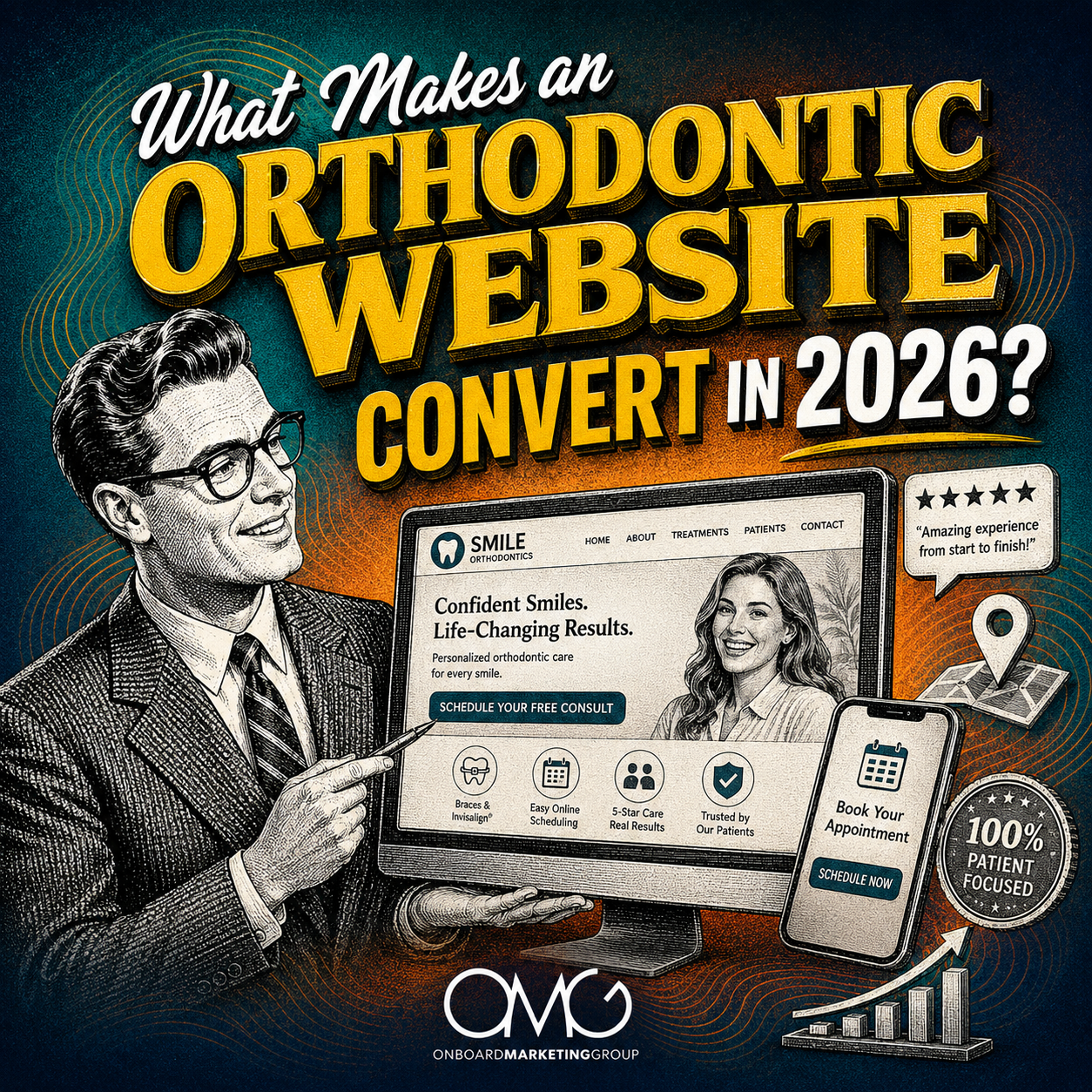
A high-converting orthodontic website answers those questions quickly and gives potential patients a clear reason to take the next step. That is why website design in 2026 isn't just about appearance. Your website needs to combine strategy, messaging, search visibility, patient experience, and conversion.
1. Your Homepage Has One Job: Create Clarity
One of the biggest website mistakes orthodontic practices make is trying to put everything on the homepage. Your homepage does not need to explain every treatment, answer every question, or tell your entire story.
Instead, it should quickly communicate:
Who you are
What you do
Who you serve
Where you're located
Why patients should choose you
What they should do next
The deeper information belongs on treatment pages, doctor pages, location pages, blogs, FAQs, and other supporting content. Think of your homepage as the front door to your practice. A patient should immediately understand where they are and where they need to go next.
2. Make the Next Step Obvious
What do you want someone to do after visiting your website?
Schedule a consultation? Call your office? Request an appointment?
That action should never be difficult to find.
Strong orthodontic websites strategically place calls to action throughout the patient journey rather than hiding a single "Contact Us" button in the navigation.
For example:
Schedule a Consultation
Request an Appointment
Get Started
Meet Our Team
Explore Treatment Options
The appropriate call to action may change depending on the page. Someone reading about Invisalign may be ready to schedule, while a parent researching early orthodontic treatment may want to learn more first. A high-converting website meets patients where they are and makes their next logical step easy.
3. Design for the Patient, Not the Practice
Your website isn't really about your practice. It's about the person visiting it.
Patients don't arrive thinking about your internal processes, technology, marketing strategy, or organizational structure. They're thinking about their own needs. A parent may wonder whether their child actually needs braces. A teenager may be worried about how braces will look. An adult may want to know whether clear aligners can fit their lifestyle. Someone else may be worried about cost.
Effective website messaging takes those concerns and makes the patient the center of the story. Instead of simply saying what your practice offers, explain why it matters to the patient. That shift can turn a website from an online brochure into part of the patient experience.
4. Build Trust Before Asking for the Appointment
Choosing an orthodontist is a significant decision. Treatment can last months or years, which means patients aren't simply choosing braces or aligners. They're choosing a doctor and team they trust to guide them through the process. Your website should begin establishing that trust before the first phone call.
Strong trust signals can include:
Doctor credentials and experience
Current photos of the doctor and team
Updated photos of the office
Patient testimonials and reviews
Before-and-after results
Practice philosophy
Community involvement
Educational videos
Clear explanations of treatment
Welcoming, patient-focused imagery
Photography plays an important role in how patients perceive your practice. Whenever possible, we recommend using fresh, professional photos of the doctor, team, and office so prospective patients can see the actual people and environment they will experience when they visit. However, not every practice has access to a large library of professional patient photography. Strategically selected stock imagery can absolutely have a place on an orthodontic website, especially when it helps communicate the patient experience in a warm, relatable way.
The key is choosing imagery intentionally. Avoid clinical stock photos showing doctors actively working inside a patient's mouth, injections, dental instruments, or other imagery that could create unnecessary anxiety for someone who is already nervous about treatment. Instead, choose images that feel positive, comfortable, and focused on the outcome and experience of orthodontic care.
The goal isn't for every image to be original. It's for the website to feel authentic to the practice, welcoming to the patient, and consistent with the experience you want people to expect.
5. Answer the Questions That Could Stop Someone From Scheduling
Every unanswered question creates uncertainty. And uncertainty can create friction.
Consider the questions prospective patients regularly ask:
How much do braces cost?
Does insurance cover orthodontics?
Am I too old for Invisalign?
When should my child first see an orthodontist?
How long does treatment take?
Can I play sports with braces?
What happens during the first consultation?
These aren't just blog topics. They are part of your conversion strategy. Educational treatment pages, blogs, videos, and FAQs help patients move from uncertainty toward confidence. They also support modern search visibility. Google's current guidance emphasizes helpful, original, people-first information that satisfies what visitors are actually trying to accomplish. Google applies additional scrutiny around trust and expertise to health-related information.
In other words, the content that helps your patients make better decisions can also help search engines better understand your expertise.
6. Build for Search Beyond Traditional Google Results
SEO still matters, but the way people search is evolving.
A prospective patient might type “orthodontist near me” into Google.
But another might ask:
Who is a good orthodontist for adult Invisalign in my area?
Or:
What should I look for when choosing an orthodontist for my child?
Search is becoming more conversational and specific, particularly as AI-powered experiences become part of how people research. Google itself recommends creating unique, useful content for its AI search experiences and notes that users are asking longer, more specific questions and follow-up questions. That makes your website important for more than traditional SEO.
A strong 2026 content strategy should consider:
SEO: Can search engines find and understand your website?
GEO: Does your practice provide clear, authoritative information that can help AI systems understand who you are, what you offer, and why you're relevant?
AEO: Does your content clearly answer the questions patients are asking?
Your website becomes the foundation that supports all three.
7. Mobile Experience Is the Website Experience
Pull out your phone and visit your practice's website.
- Can you immediately understand what the practice offers?
- Can you read everything without zooming?
- Are the buttons easy to tap?
- Can you quickly call or schedule?
- Does anything cover the screen?
- Does the website feel just as polished as it does on a desktop?
If not, there is a problem.
Google uses the mobile version of website content for indexing and ranking, and it continues to strongly recommend mobile-friendly website experiences. For an orthodontic practice, mobile design also affects the patient experience. Every unnecessary click, confusing menu, tiny button, or difficult form adds friction between interest and action.
8. Speed Matters
A beautiful website loses its impact if patients are waiting for it to load. Large images, unnecessary scripts, poorly optimized video, plugins, and bloated design elements can all slow a site down. Google's current Core Web Vitals guidance recommends a Largest Contentful Paint of 2.5 seconds or less, an Interaction to Next Paint of less than 200 milliseconds, and a Cumulative Layout Shift score of less than 0.1 for a good user experience.
But speed isn't only an SEO consideration.
It's a patient-experience consideration. If someone clicks your website and immediately encounters a slow, frustrating experience, you've introduced friction before they've learned a single thing about your practice.
9. Connect Your Marketing Instead of Treating the Website as an Island
One of the biggest changes in orthodontic marketing is that your website no longer operates alone.
Imagine a prospective patient:
↓
↓
↓
↓
↓
↓
↓
Your website should reinforce the same brand, messaging, expertise, and patient experience someone sees everywhere else. Your Website + SEO + GEO + Social Media + Reviews + Paid Advertising+ Brand shouldn't feel like separate marketing projects.
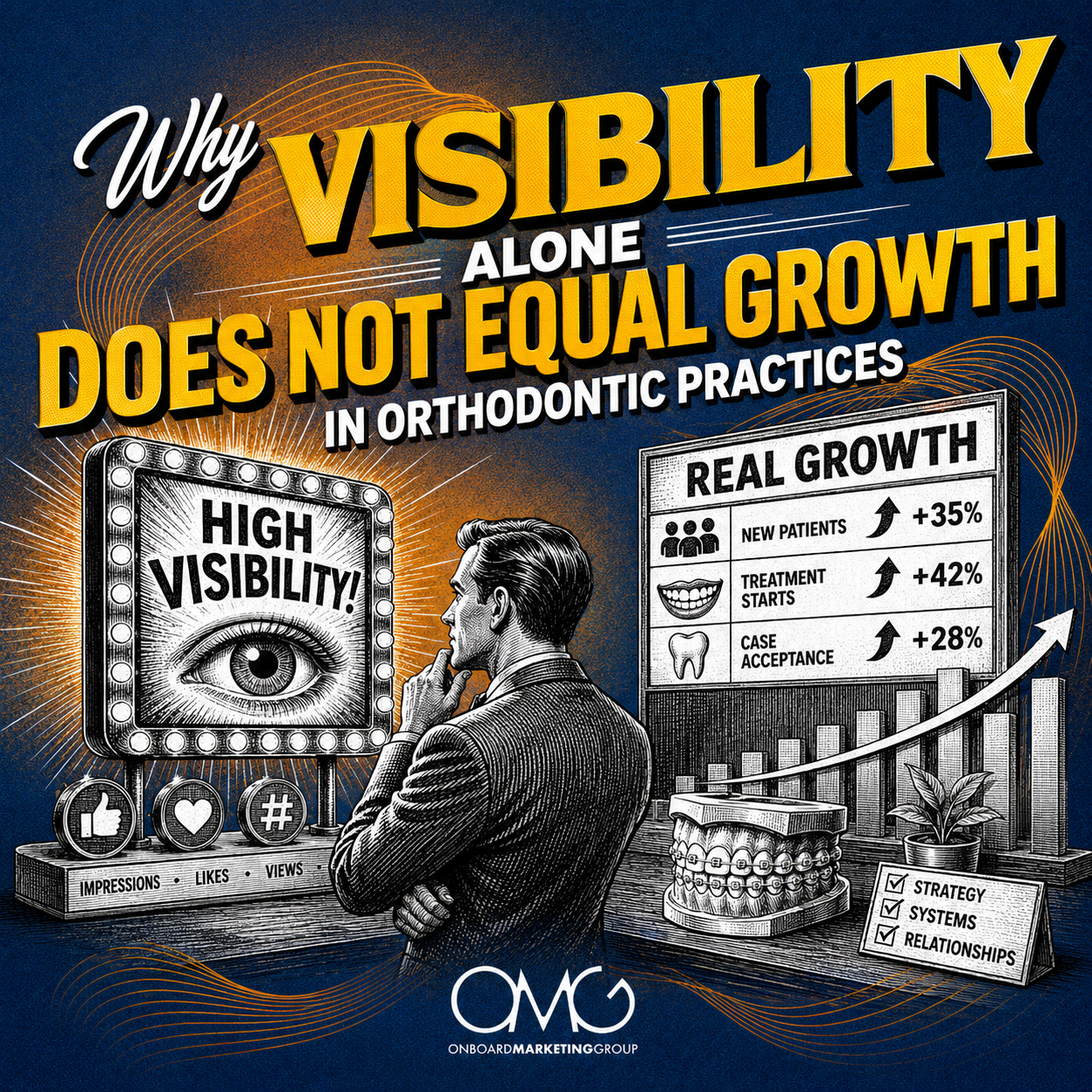
10. Measure Starts, Not Just Traffic
More website traffic sounds good. But 10,000 visitors who don't schedule aren't necessarily more valuable than 1,000 highly qualified visitors who do. That is why website performance shouldn't stop at sessions, rankings, clicks, or impressions. Practices should also understand what happens after someone arrives.
Are visitors reaching the consultation page?
Are they clicking the scheduling button?
Which treatment pages lead to inquiries?
Which traffic sources produce qualified leads?
Where are potential patients leaving?
Marketing becomes much more powerful when a practice can connect visibility to behavior and behavior to growth.
Your Website Should Be Part of Your Growth Engine
The best orthodontic websites in 2026 aren't simply the ones with the newest design. They're the ones that make it easier for patients to understand, trust, and choose the practice.
A strong website creates clarity.
- It answers questions.
- It demonstrates expertise.
- It builds trust.
- It supports search and AI visibility.
- It removes friction.
And ultimately, it gives the right patient a clear path from interest to consultation to start. Your website isn't simply where patients learn about your practice. It's one of the most important pieces connecting your entire growth engine.
Is Your Website Turning Interest Into Starts?
Your website should do more than look good. It should build trust, answer questions, remove friction, and give prospective patients a clear reason to take the next step.
Schedule a Growth Call with Onboard Marketing Group and discover how your website can become a stronger part of the journey from search to scheduled consultation.